how 486 gelyney kitchen exhaust hood work
Cooking creates more than delicious meals. Every time you fry, grill, boil, or sauté food, your kitchen fills with smoke, steam, grease particles, heat, and odors. Without proper ventilation, these contaminants can spread throughout the home, reducing indoor air quality and causing grease buildup on surfaces. This is where a kitchen exhaust hood becomes essential.
If you are wondering how 486 gelyney kitchen exhaust hood work, the answer lies in a carefully designed ventilation process that captures contaminated air and removes it from the cooking environment. These systems combine airflow management, grease filtration, ductwork, and powerful fans to create a cleaner and healthier kitchen. Whether installed in a residential kitchen or a commercial cooking space, understanding how the system functions can help you improve efficiency, safety, and long-term performance.
| Component | Function |
|---|---|
| Hood Canopy | Captures rising smoke and heat |
| Grease Filters | Traps airborne grease particles |
| Exhaust Fan | Pulls contaminated air through the system |
| Ductwork | Carries air outside the building |
| Control System | Manages speed and operation |
| Lighting | Improves visibility during cooking |
What Is a 486 Gelyney Kitchen Exhaust Hood?
A 486 gelyney kitchen exhaust hood is a ventilation system installed above cooking appliances to remove smoke, grease, steam, odors, and heat produced during food preparation. It acts as the first line of defense against airborne contaminants that can accumulate in a kitchen environment.
The system works by capturing pollutants at their source. Since hot air naturally rises, placing the hood above cooking equipment allows it to intercept contaminated air before it spreads throughout the room. This process improves indoor air quality and helps keep kitchen surfaces cleaner.
Kitchen exhaust hoods are used in homes, restaurants, cafeterias, food processing facilities, and commercial kitchens. Their design may vary depending on cooking volume and ventilation requirements, but the fundamental operating principle remains the same: capture, filter, and remove unwanted airborne particles.
Why Kitchen Ventilation Is Important
Kitchen ventilation plays a major role in maintaining a healthy indoor environment. Cooking releases microscopic particles into the air, many of which are invisible to the naked eye. Without proper ventilation, these particles can accumulate and create an uncomfortable cooking space.
One of the most immediate benefits of an exhaust hood is odor control. Strong cooking smells can linger for hours without adequate air circulation. A ventilation system removes these odors before they spread throughout the building.
Proper ventilation also helps manage humidity levels. Boiling water and cooking with steam release moisture into the air. Excess humidity can contribute to mold growth, condensation issues, and damage to cabinets or walls. By removing moisture-laden air, the exhaust hood helps protect both the kitchen structure and overall indoor air quality.
Main Components of the Exhaust Hood System
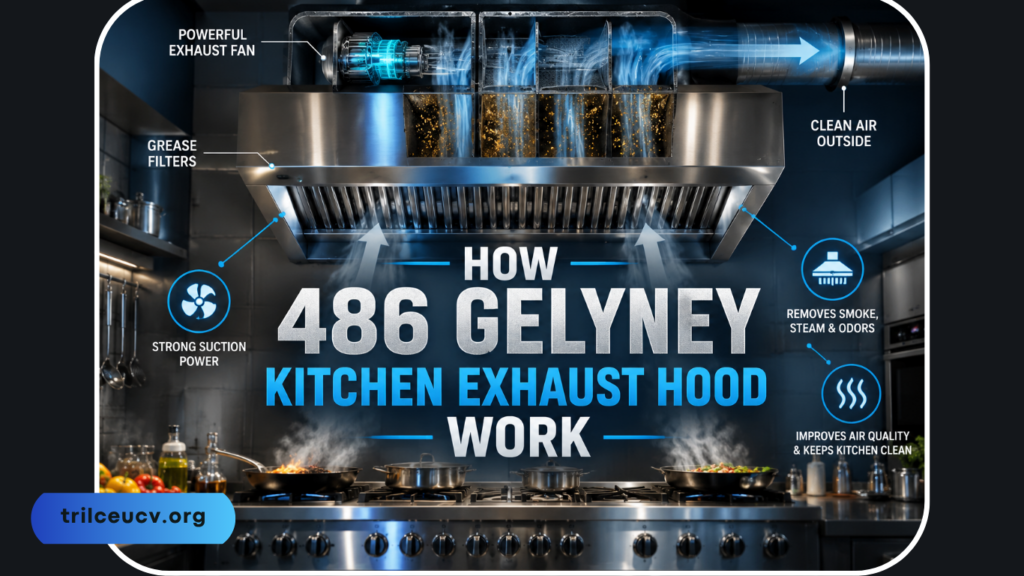
Understanding the system’s components makes it easier to understand how 486 gelyney kitchen exhaust hood work. Each part contributes to the overall ventilation process.
The hood canopy is the visible section mounted above the cooking area. Its purpose is to collect rising contaminants and direct them toward the filtration system. The canopy’s size and design affect how efficiently it captures smoke and grease.
Grease filters are positioned beneath the canopy. These filters trap grease particles before air enters the duct system. This prevents excessive grease accumulation inside ducts and reduces maintenance requirements.
The exhaust fan creates the airflow necessary for ventilation. Without the fan, contaminants would remain trapped inside the kitchen. Additional components often include lighting systems, electronic controls, dampers, and ductwork that transports contaminated air outside.
How Air Capture Works Above the Cooking Surface
The air capture process begins the moment cooking generates heat, smoke, or steam. Hot air rises naturally due to convection, carrying contaminants upward toward the exhaust hood.
The hood canopy is strategically positioned to intercept this rising air stream. As smoke and vapors enter the capture area, the exhaust fan creates suction that pulls contaminants into the ventilation system. The effectiveness of this process depends on hood size, mounting height, and airflow capacity.
Proper capture is critical because contaminants that escape the hood may spread throughout the kitchen. Modern exhaust hood designs maximize capture efficiency by creating an airflow pattern that directs pollutants toward the filtration system as quickly as possible.
The Science Behind Airflow and Ventilation
Airflow is the foundation of every kitchen exhaust system. The fan generates negative pressure within the hood, creating a controlled path for contaminated air to follow.
As air moves through the system, it passes through filters that remove grease particles. The cleaned air stream then continues into the ductwork and exits the building through an exterior vent. This continuous airflow prevents contaminants from accumulating indoors.
Several factors influence airflow performance, including fan power, duct diameter, filter condition, and overall system design. When all components work together efficiently, the system provides consistent ventilation while minimizing energy consumption.
How Grease Filters Remove Airborne Contaminants
Grease filters are one of the most important components in a kitchen exhaust hood system. During cooking, oils and fats become airborne in the form of tiny droplets. These particles travel upward with heat and steam, eventually reaching the hood canopy.
As contaminated air passes through the filters, grease particles are separated from the airflow and collected on the filter surfaces. This process prevents grease from entering the fan assembly and ductwork, where it could accumulate over time and create maintenance or safety issues.
Most modern exhaust hoods use metal baffle filters because they are durable, easy to clean, and highly effective at grease removal. The angled design forces air to change direction multiple times, causing grease particles to impact the metal surfaces and separate from the airflow. This simple but effective mechanism helps maintain system efficiency while reducing fire risks associated with grease buildup.
Regular filter cleaning is essential. Dirty filters restrict airflow, forcing the fan to work harder and reducing the hood’s ability to capture contaminants. Maintaining clean filters improves ventilation performance and extends the lifespan of the entire system.
Understanding the Role of the Exhaust Fan
The exhaust fan serves as the driving force behind the ventilation process. Without the fan, the hood would be unable to create the airflow necessary to remove smoke, odors, and grease-laden air from the kitchen.
When activated, the fan creates negative pressure inside the hood canopy. This pressure difference pulls contaminated air through the filters and into the duct system. The strength of the airflow depends on the motor’s power and the fan’s design.
Different cooking activities require different ventilation levels. Light cooking may only need low-speed operation, while grilling, frying, or high-volume cooking often requires maximum airflow. Many modern systems include multiple speed settings, allowing users to adjust ventilation according to their needs.
A properly functioning fan improves air quality, enhances comfort, and helps maintain a cleaner kitchen environment. Routine maintenance, including cleaning fan blades and inspecting motor components, ensures reliable long-term performance.
How Ductwork Transports Contaminated Air
After air passes through the grease filters, it enters the duct system. Ductwork serves as the pathway that carries contaminated air from the hood to the outside of the building.
The design of the duct system significantly affects ventilation efficiency. Straight ducts generally provide better airflow than systems with numerous bends and turns. Each bend creates resistance that can reduce airflow and increase the workload on the fan.
High-quality duct materials are also important. Metal ducts are commonly used because they are durable, fire-resistant, and capable of handling grease-laden air. Proper sealing prevents air leaks that could reduce system performance.
The ultimate goal of the duct system is to transport contaminated air safely and efficiently away from the cooking area. A well-designed duct network improves airflow consistency while reducing noise and energy consumption.
| Duct Feature | Benefit |
|---|---|
| Smooth Interior Surface | Better airflow |
| Metal Construction | Fire resistance |
| Proper Sealing | Prevents air leaks |
| Minimal Bends | Reduced airflow resistance |
| Correct Sizing | Improved efficiency |
Ducted vs Ductless Exhaust Hood Systems
Kitchen exhaust hoods generally fall into two categories: ducted systems and ductless systems. Understanding the difference helps explain how various ventilation configurations operate.
Ducted systems remove contaminated air completely from the building. After filtration, the air travels through ductwork and is discharged outdoors. This approach provides the highest level of ventilation because heat, moisture, odors, and contaminants are physically removed from the indoor environment.
Ductless systems operate differently. Instead of venting air outdoors, they pass air through filters and recirculate it back into the kitchen. Activated carbon filters help reduce odors, while grease filters capture airborne oil particles.
Although ductless systems are easier to install, ducted systems generally provide superior performance. They are particularly beneficial in kitchens with heavy cooking activity where large amounts of smoke, steam, and grease are generated regularly.
Importance of Proper Hood Placement
Even the most powerful exhaust hood cannot perform effectively if it is installed incorrectly. Placement plays a critical role in capture efficiency and overall ventilation performance.
The hood should be positioned directly above the cooking surface so it can intercept rising contaminants before they spread throughout the room. Height is equally important. If the hood is mounted too high, smoke and grease may escape before reaching the capture zone. If it is too low, it may interfere with cooking activities.
The width of the hood also matters. Ideally, the hood should extend beyond the edges of the cooking equipment to maximize capture efficiency. Larger capture areas improve the hood’s ability to collect smoke, steam, and heat generated during cooking.
Proper installation helps ensure that the ventilation system performs as intended while reducing energy waste and improving indoor air quality.
How Kitchen Exhaust Hoods Improve Indoor Air Quality
One of the biggest advantages of a properly functioning exhaust hood is improved indoor air quality. Cooking generates a wide range of pollutants that can affect comfort and health if allowed to accumulate indoors.
Smoke particles, grease aerosols, combustion gases, and cooking odors can remain suspended in the air long after food preparation is complete. An efficient exhaust system removes these contaminants before they spread throughout the building.
The reduction of airborne grease also helps keep kitchen surfaces cleaner. Cabinets, walls, ceilings, and appliances experience less buildup, reducing cleaning requirements and preserving their appearance.
In addition to removing contaminants, exhaust hoods help regulate temperature and humidity. This creates a more comfortable cooking environment while minimizing moisture-related issues such as condensation and mold growth.
By continuously removing unwanted pollutants, the system contributes to a cleaner, healthier, and more enjoyable kitchen experience.
Maintenance Requirements for Long-Term Performance
Regular maintenance is essential for keeping a 486 gelyney kitchen exhaust hood operating efficiently. Like any ventilation system, performance can decline over time if components are not cleaned and inspected on a routine basis.
Grease filters require the most frequent attention because they collect airborne oils and cooking residues. Depending on cooking frequency, filters may need cleaning weekly, monthly, or quarterly. Allowing grease to accumulate excessively can restrict airflow and reduce capture efficiency.
The fan assembly should also be inspected periodically. Dust, grease, and debris can collect on fan blades, causing reduced performance and increased noise levels. Cleaning these components helps maintain proper airflow and prevents unnecessary strain on the motor.
Ductwork inspections are equally important. Even with effective filtration, some grease may eventually accumulate inside ducts. Professional cleaning may be necessary in high-volume cooking environments to ensure safe and efficient operation.
Common Problems and Their Causes
Like any mechanical system, kitchen exhaust hoods can experience operational issues. Understanding common problems can help users identify and resolve issues before they become serious.
One of the most common complaints is weak airflow. This issue is often caused by clogged filters, dirty fan blades, blocked ducts, or motor problems. Reduced airflow limits the hood’s ability to capture smoke and odors effectively.
Excessive noise is another common concern. Loose components, worn bearings, fan imbalances, or debris inside the system may contribute to unusual sounds during operation. Prompt inspection can often prevent more significant mechanical failures.
Users may also notice persistent cooking odors despite operating the hood. In many cases, this indicates insufficient airflow, improper installation, dirty filters, or duct obstructions. Addressing the root cause helps restore ventilation effectiveness.
Energy Efficiency and Modern Exhaust Hood Technology
Modern kitchen exhaust systems are increasingly designed with energy efficiency in mind. Manufacturers recognize the importance of balancing ventilation performance with lower energy consumption.
Variable-speed motors are one of the most significant advancements. Instead of operating at full power continuously, these systems allow users to adjust airflow according to cooking demands. Lower speeds consume less electricity while still providing adequate ventilation for light cooking tasks.
Many newer systems also incorporate LED lighting. Compared to traditional bulbs, LED technology uses less energy, produces less heat, and offers a longer service life. This contributes to overall operational efficiency.
Smart controls are becoming more common as well. Some systems automatically adjust fan speed based on cooking conditions, optimizing airflow while reducing unnecessary energy usage. These innovations help improve performance while minimizing operating costs.
| Technology | Benefit |
|---|---|
| Variable-Speed Fan | Reduced energy consumption |
| LED Lighting | Lower electricity usage |
| Smart Controls | Automatic airflow adjustment |
| Improved Filters | Better contaminant capture |
| Efficient Motors | Enhanced performance |
Safety Benefits of a Kitchen Exhaust Hood
Safety is one of the primary reasons kitchen exhaust hoods are installed in both residential and commercial settings. Cooking activities generate heat, grease, and airborne particles that can create hazardous conditions if not properly managed.
Grease accumulation is a significant fire risk. By capturing grease particles before they enter ductwork, the hood system helps reduce the likelihood of grease-related fires. Regular maintenance further minimizes this risk.
Ventilation systems also help remove combustion byproducts produced by gas cooking appliances. These emissions can affect indoor air quality if allowed to accumulate. Effective ventilation ensures these contaminants are safely removed from the cooking environment.
In busy kitchens, reducing excess heat is another important safety advantage. Lower temperatures create a more comfortable workspace and reduce heat-related stress for individuals spending extended periods near cooking equipment.
Factors That Affect Exhaust Hood Performance
Several factors influence how effectively a kitchen exhaust hood performs. Understanding these variables helps users maximize ventilation efficiency.
The size of the hood is one of the most important considerations. A hood that is too small may fail to capture all rising contaminants, allowing smoke and grease to escape into the room.
Airflow capacity is another critical factor. The fan must generate sufficient airflow to remove contaminants without creating excessive noise or energy consumption. Proper sizing ensures balanced performance.
Installation quality also affects results. Incorrect mounting height, poorly designed ductwork, and inadequate maintenance can all reduce system effectiveness. Even high-quality equipment may perform poorly if installation guidelines are not followed.
Environmental conditions such as room layout, ceiling height, and cooking volume further influence overall performance. A properly designed system accounts for these factors to achieve optimal ventilation.
Choosing the Right Kitchen Exhaust Hood
Selecting the appropriate exhaust hood depends on cooking habits, kitchen size, and ventilation requirements. Residential kitchens typically require less airflow than commercial cooking environments, but both benefit from properly sized equipment.
Homeowners should consider cooking frequency and cooking style when choosing a system. Those who frequently fry, grill, or cook with high heat generally require stronger ventilation than individuals who prepare lighter meals.
The choice between ducted and ductless systems should also be evaluated carefully. Ducted systems provide superior contaminant removal, while ductless systems offer easier installation in situations where external venting is not practical.
Other considerations include noise levels, filter design, energy efficiency, maintenance requirements, and overall build quality. Selecting a well-designed system helps ensure long-term reliability and effective ventilation performance.
Future Trends in Kitchen Ventilation Systems
Kitchen ventilation technology continues to evolve as manufacturers seek to improve efficiency, performance, and user convenience. Smart ventilation systems are becoming increasingly popular in both residential and commercial applications.
Advanced sensors can detect cooking activity and automatically adjust airflow levels. This feature improves energy efficiency while maintaining optimal ventilation. Smart integration with home automation systems is also becoming more common.
Improved filtration technologies are enhancing contaminant capture while reducing maintenance requirements. Manufacturers are developing systems that maximize airflow efficiency while minimizing operational noise.
As energy efficiency standards continue to advance, future exhaust hood designs will likely focus on reducing electricity consumption without sacrificing performance. These innovations will help create cleaner, healthier, and more sustainable kitchen environments.
Conclusion
Understanding how 486 gelyney kitchen exhaust hood work reveals the importance of proper kitchen ventilation. These systems rely on a combination of air capture, grease filtration, fan-powered airflow, and ductwork to remove smoke, steam, odors, heat, and airborne contaminants from cooking areas.
Every component plays an essential role in maintaining performance. The hood canopy captures rising pollutants, filters remove grease particles, fans create the airflow needed for extraction, and ductwork safely transports contaminated air outside. When properly installed and maintained, the system improves indoor air quality, enhances safety, reduces grease buildup, and creates a more comfortable cooking environment.
Whether used in a home kitchen or a commercial facility, a well-designed exhaust hood is an investment in cleanliness, efficiency, and long-term kitchen performance.
Frequently Asked Questions
How does a 486 gelyney kitchen exhaust hood remove smoke?
The hood captures rising smoke above the cooking surface and uses a fan to pull it through filters and ductwork before venting it outside or recirculating filtered air.
What is the purpose of grease filters?
Grease filters trap airborne oil and grease particles before they enter the fan and duct system, helping maintain efficiency and reduce fire risks.
How often should exhaust hood filters be cleaned?
Cleaning frequency depends on cooking volume. Residential users often clean filters monthly, while commercial kitchens may require more frequent maintenance.
Are ducted exhaust hoods better than ductless models?
In most cases, ducted systems provide superior ventilation because they remove contaminants, heat, moisture, and odors completely from the building.
Why is my kitchen exhaust hood not removing odors effectively?
Possible causes include clogged filters, insufficient airflow, blocked ducts, improper installation, or a fan that is not operating correctly.
Can an exhaust hood improve indoor air quality?
Yes. By removing smoke, grease particles, odors, moisture, and cooking emissions, an exhaust hood significantly improves indoor air quality.
What factors affect exhaust hood performance?
Key factors include hood size, fan capacity, filter condition, duct design, installation quality, and regular maintenance.
Is regular maintenance necessary?
Yes. Routine cleaning and inspection help maintain airflow, improve efficiency, extend equipment lifespan, and reduce potential safety risks.