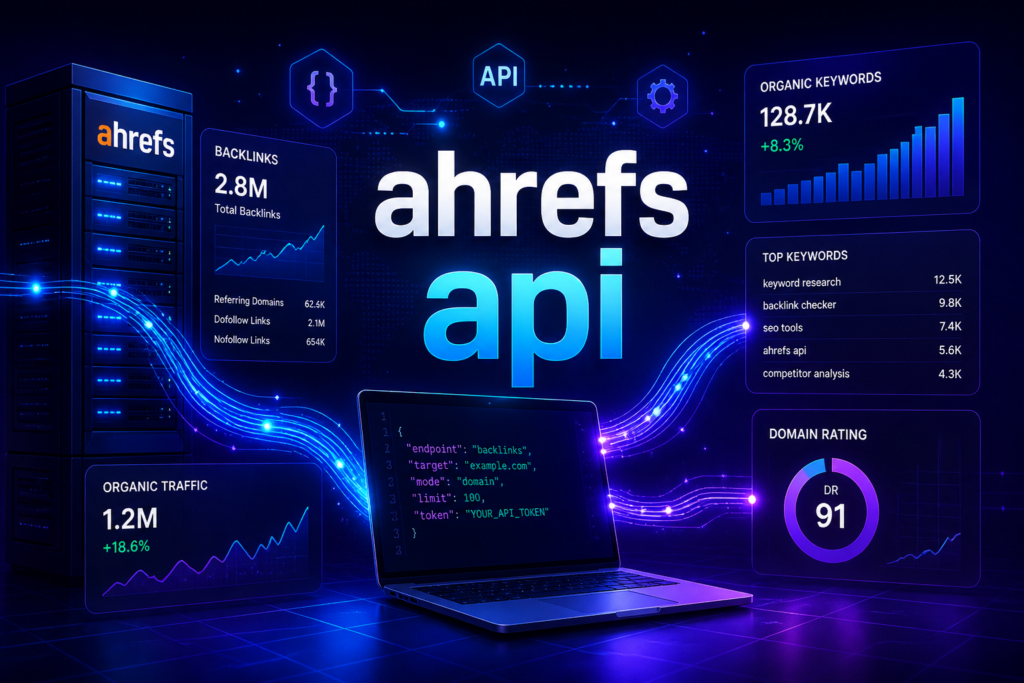
ahrefs api
The world of SEO is driven by data, and those who can access, analyze, and act on it effectively always stay ahead. If you’ve ever wished you could automate keyword research, backlink analysis, or site audits without manually logging into tools, the Ahrefs API opens that door. It transforms Ahrefs from a powerful SEO platform into a fully customizable data engine you can plug directly into your workflows, dashboards, or applications.
Whether you’re a developer building SEO tools, a marketer scaling campaigns, or a business owner looking to streamline reporting, understanding the Ahrefs API can give you a serious advantage. This guide breaks down everything—from fundamentals to advanced use cases—so you can confidently use the Ahrefs API to its full potential.
What is the Ahrefs API
The Ahrefs API is a programmatic interface that allows users to access Ahrefs data directly through code instead of using the standard web interface. It enables developers and SEO professionals to retrieve massive datasets related to backlinks, keywords, rankings, and more, making automation and customization possible.
With the API, you can integrate Ahrefs data into your own tools, dashboards, or internal systems. For example, instead of manually checking backlinks for multiple websites, you can build a script that fetches and updates this data automatically. This saves time and reduces repetitive work, especially for agencies or large teams managing multiple clients.
The API essentially acts as a bridge between Ahrefs’ database and your applications. You send a request, and it returns structured data—usually in JSON or CSV format—that you can analyze or display however you want. This flexibility makes it incredibly valuable for advanced SEO strategies and data-driven decision-making.
Key Features of the Ahrefs API
The Ahrefs API offers a wide range of features that mirror the capabilities of the Ahrefs platform itself. One of the most powerful features is backlink analysis, which allows you to retrieve detailed data about referring domains, anchor text, and link growth over time.
Another important feature is keyword data access. You can pull keyword metrics such as search volume, keyword difficulty, and click metrics. This is especially useful for building custom keyword research tools or automating SEO reports for clients.
Additionally, the API provides access to domain and URL metrics like Domain Rating (DR), URL Rating (UR), and organic traffic estimates. These metrics are essential for evaluating website authority and performance. Together, these features make the Ahrefs API a comprehensive solution for advanced SEO data needs.
How Ahrefs API Works
The Ahrefs API operates through HTTP requests. You send a request to a specific endpoint with parameters such as the target domain, type of data, and your API key. The API then processes your request and returns the relevant data.
Each request must include authentication, typically in the form of an API token. This ensures that only authorized users can access the data. The response is structured, making it easy to parse and use in applications, scripts, or dashboards.
The system also includes rate limits and usage-based pricing, meaning each request consumes a certain amount of credits. Understanding how these credits work is crucial to managing costs effectively while maximizing data usage.
Benefits of Using Ahrefs API
One of the biggest benefits of using the Ahrefs API is automation. Tasks that normally take hours—like pulling backlink reports or tracking keyword rankings—can be completed in seconds with automated scripts.
Another advantage is customization. Unlike the standard Ahrefs dashboard, the API allows you to display data exactly how you want. You can build custom reports tailored to clients or integrate SEO metrics into your internal systems.
Scalability is also a major benefit. Whether you’re analyzing one website or thousands, the API can handle large volumes of data efficiently. This makes it ideal for agencies, SaaS companies, and enterprise-level SEO operations.
Ahrefs API Pricing and Plans
Ahrefs API access is typically included in higher-tier plans or offered separately depending on usage. The pricing model is based on credits, where each API request consumes a certain number of units depending on the data requested.
| Plan Type | API Access | Best For |
|---|---|---|
| Lite | Limited or none | Beginners |
| Standard | Partial | Small businesses |
| Advanced | Full access | Agencies |
| Enterprise | Custom | Large-scale operations |
The more complex the request, the more credits it consumes. For example, retrieving backlink data for a large domain may cost more credits than fetching basic domain metrics. Understanding this structure helps in optimizing usage and avoiding unnecessary costs.
Setting Up Ahrefs API Access
To start using the Ahrefs API, you need an active Ahrefs account with API access enabled. Once you have that, you can generate your API key from the dashboard.
The API key acts as your authentication token. It must be included in every request you send. Without it, the API will reject your request. Keeping this key secure is essential, as unauthorized use could lead to unexpected charges.
After obtaining the key, you can begin making requests using tools like Postman, cURL, or programming languages such as Python and JavaScript. This setup process is straightforward and usually takes only a few minutes.
Common Ahrefs API Endpoints
The Ahrefs API includes multiple endpoints, each designed for a specific type of data. Some of the most commonly used endpoints include backlinks, referring domains, organic keywords, and domain metrics.
Each endpoint requires specific parameters. For example, when querying backlinks, you need to specify the target domain and mode (domain or URL). This flexibility allows you to refine your queries and get highly targeted data.
Understanding these endpoints is key to using the API effectively. By combining different endpoints, you can create comprehensive SEO insights tailored to your needs.
Ahrefs API for Keyword Research
Keyword research becomes significantly more powerful with the Ahrefs API. Instead of manually searching for keywords, you can automate the process and retrieve thousands of keyword suggestions in seconds.
You can also analyze keyword metrics such as search volume, difficulty, and click-through rate. This helps in identifying high-potential keywords for content creation and SEO campaigns.
Another advantage is the ability to track keyword trends over time. By storing API data, you can monitor changes and adjust your strategy accordingly, ensuring long-term success.
Using Ahrefs API for Backlink Analysis
Backlinks are a crucial ranking factor, and the Ahrefs API provides deep insights into link profiles. You can retrieve data about new and lost backlinks, anchor text distribution, and referring domains.
This is particularly useful for competitor analysis. By analyzing your competitors’ backlinks, you can identify link-building opportunities and replicate successful strategies.
Automating backlink monitoring also helps in maintaining a healthy link profile. You can quickly detect toxic links and take action before they impact your rankings.
Ahrefs API for Competitor Analysis
Competitor analysis becomes more efficient with API access. You can pull data on competitors’ organic traffic, top-performing keywords, and backlink profiles.
This information allows you to identify gaps in your strategy and discover opportunities for growth. For example, if a competitor ranks for keywords you haven’t targeted, you can create content to compete in those areas.
By continuously monitoring competitors through automated scripts, you can stay ahead in the ever-changing SEO landscape.
Integrating Ahrefs API with Tools
One of the most powerful aspects of the Ahrefs API is its ability to integrate with other tools. You can connect it with data visualization platforms, CRM systems, or custom dashboards.
For example, integrating with Google Data Studio or Power BI allows you to create dynamic SEO reports. These reports can update automatically, saving time and improving accuracy.
Developers can also build custom applications that use Ahrefs data to provide unique insights. This opens up endless possibilities for innovation and efficiency.
Best Practices for Using Ahrefs API
To get the most out of the Ahrefs API, it’s important to follow best practices. Start by optimizing your queries to reduce unnecessary data usage and save credits.
Caching data is another useful strategy. Instead of making repeated API calls, store the data locally and update it periodically. This reduces costs and improves performance.
Security is also critical. Always keep your API key private and avoid exposing it in public code repositories. Following these practices ensures a smooth and secure experience.
Limitations of Ahrefs API
While the Ahrefs API is powerful, it does have some limitations. One of the main constraints is the credit-based pricing model, which can become expensive if not managed properly.
Another limitation is that not all features available in the Ahrefs interface are accessible via the API. Some advanced reports may require manual access.
Additionally, there may be rate limits that restrict the number of requests you can make within a certain time frame. Understanding these limitations helps in planning your usage effectively.
Ahrefs API vs Other SEO APIs
When compared to other SEO APIs, Ahrefs stands out for its extensive backlink database and accurate metrics. However, tools like SEMrush and Moz also offer competitive APIs with their own strengths.
| Feature | Ahrefs API | SEMrush API | Moz API |
|---|---|---|---|
| Backlink Data | ممتاز | Good | متوسط |
| Keyword Data | Strong | Very Strong | Moderate |
| Ease of Use | Moderate | Easy | Easy |
Choosing the right API depends on your specific needs. If backlinks are your priority, Ahrefs is often the preferred choice.
Real-World Use Cases of Ahrefs API
The Ahrefs API is widely used in real-world applications. SEO agencies use it to automate reporting and track client performance. SaaS companies integrate it into their platforms to provide SEO insights to users.
Content marketers use the API to identify trending keywords and optimize their strategies. Meanwhile, developers build custom tools that leverage Ahrefs data for unique solutions.
These use cases highlight the versatility of the API and its ability to adapt to different industries and needs.
Future of Ahrefs API in SEO Automation
As SEO continues to evolve, automation will play an even bigger role. The Ahrefs API is likely to become more advanced, offering deeper insights and improved functionality.
With the rise of AI and machine learning, integrating Ahrefs data into intelligent systems could unlock new possibilities. For example, automated content optimization or predictive SEO strategies.
The future of SEO is data-driven, and tools like the Ahrefs API will remain at the forefront of this transformation.
Conclusion
The Ahrefs API is more than just a tool—it’s a gateway to advanced SEO automation and data analysis. By understanding how it works and applying best practices, you can transform your SEO strategy and achieve better results with less effort. Whether you’re building custom tools, automating workflows, or analyzing competitors, the API offers unmatched flexibility and power.
FAQs
What is the Ahrefs API used for?
It is used to access Ahrefs data programmatically for tasks like keyword research, backlink analysis, and SEO automation.
Do I need coding skills to use Ahrefs API?
Basic knowledge of programming is helpful, but tools like Postman can make it easier for beginners.
Is Ahrefs API free?
No, it is usually included in paid plans and operates on a credit-based system.
Can I integrate Ahrefs API with my website?
Yes, you can integrate it into websites, dashboards, and applications using various programming languages.
What data can I get from Ahrefs API?
You can retrieve backlinks, keywords, domain metrics, traffic estimates, and more.