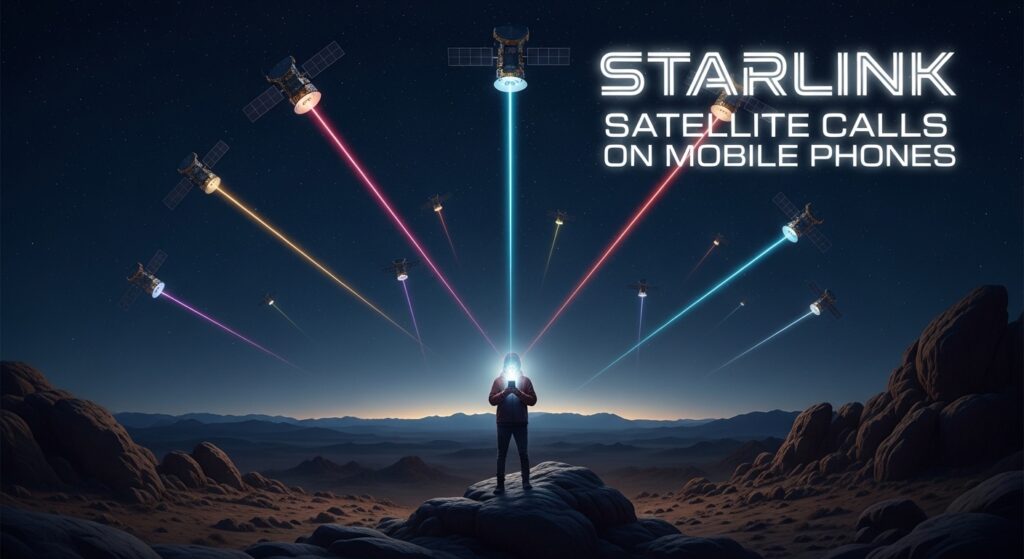
starlink satellite calls on mobile phones
The idea of making calls from anywhere on Earth—without relying on traditional mobile towers—is no longer science fiction. Starlink satellite calls on mobile phones are transforming how people stay connected, especially in remote and underserved areas. Imagine being in a desert, a mountain, or even the middle of the ocean and still being able to call, text, or access the internet directly from your phone. This breakthrough is reshaping communication by eliminating dead zones and expanding connectivity worldwide.
With rapid advancements in satellite technology, mobile networks are evolving beyond terrestrial limitations. Starlink’s approach to direct-to-cell communication is opening new doors for emergency services, travelers, businesses, and everyday users. This guide explores everything you need to know about how it works, its benefits, limitations, and what the future holds.
What Are Starlink Satellite Calls on Mobile Phones
Starlink satellite calls on mobile phones refer to the ability to make voice calls, send texts, and potentially use data services directly through satellites instead of relying on traditional cell towers. This technology connects your phone to satellites orbiting the Earth, enabling communication even in areas with no network coverage.
Unlike conventional satellite phones, which require specialized devices, Starlink aims to work with standard smartphones. This makes the technology more accessible and practical for everyday use. The goal is to create a seamless experience where users don’t even notice whether they are connected to a terrestrial network or a satellite.
This innovation is particularly important for rural areas, disaster zones, and regions with poor infrastructure. It ensures that connectivity is no longer limited by geography, making communication more inclusive and reliable.
How Starlink Direct-to-Cell Technology Works
Starlink uses a network of low Earth orbit (LEO) satellites that orbit closer to the planet compared to traditional satellites. These satellites act like cell towers in space, communicating directly with mobile devices on the ground.
The system relies on advanced antennas and radio technology embedded in the satellites. These antennas can connect to standard LTE phones without requiring any hardware modifications. The signal travels from your phone to the satellite and then back to ground stations connected to the internet.
Because the satellites are closer to Earth, latency is much lower than traditional satellite systems. This allows for near real-time communication, making voice calls and messaging more practical and efficient.
Key Features of Starlink Satellite Calling
One of the most impressive features of Starlink satellite calls is global coverage. Whether you are in a remote village or traveling across continents, the network aims to provide consistent connectivity.
Another key feature is compatibility with existing smartphones. Users don’t need to buy expensive satellite phones, which lowers the barrier to entry. The system is designed to integrate with current mobile networks, allowing seamless switching between terrestrial and satellite connections.
Additionally, Starlink supports emergency communication. In situations where traditional networks fail, satellite connectivity can ensure that people stay connected and can call for help when needed.
Benefits of Satellite Calling on Mobile Phones
The biggest advantage of satellite calling is eliminating dead zones. Areas that previously had no coverage can now stay connected, which is crucial for safety and communication.
It also improves disaster response. During natural disasters, cell towers are often damaged. Satellite communication ensures that emergency services and affected individuals can still communicate.
Another benefit is enhanced travel experience. Travelers, hikers, and adventurers can stay connected without worrying about losing signal. This adds convenience and peace of mind.
Limitations and Challenges
Despite its potential, Starlink satellite calling has some limitations. One major challenge is bandwidth. Satellites have limited capacity compared to traditional networks, which may affect call quality and data speeds.
Weather conditions can also impact signal quality. Heavy rain or storms may interfere with satellite communication, although advancements are reducing this issue.
Additionally, regulatory approvals are required in different countries. Not all regions may allow direct satellite communication, which could limit availability.
Starlink vs Traditional Mobile Networks
Traditional mobile networks rely on ground-based towers that provide localized coverage. These networks are effective in urban areas but struggle in remote regions.
Starlink, on the other hand, uses satellites to provide global coverage. This means it can reach places where building infrastructure is difficult or impossible.
However, traditional networks currently offer faster speeds and higher capacity. Starlink complements these networks rather than replacing them entirely.
Compatibility with Smartphones
Starlink is designed to work with existing LTE-enabled smartphones. This is a major advantage, as users don’t need to upgrade their devices.
The technology uses standard cellular frequencies, allowing phones to connect without hardware changes. However, software updates may be required to optimize performance.
This compatibility makes adoption easier and faster, as millions of users can access satellite connectivity without additional investment.
Role in Emergency Communication
Satellite calling plays a critical role in emergencies. When natural disasters disrupt traditional networks, satellite connectivity becomes a lifeline.
Emergency responders can coordinate rescue operations more effectively. Individuals can contact authorities or loved ones even when infrastructure is damaged.
This capability enhances public safety and ensures that communication remains available during critical situations.
Impact on Rural and Remote Areas
Rural areas often suffer from poor network coverage due to the high cost of building infrastructure. Starlink addresses this issue by providing connectivity directly from space.
This can improve education, healthcare, and economic opportunities in remote regions. Students can access online learning, and healthcare providers can offer telemedicine services.
By bridging the digital divide, satellite calling contributes to social and economic development.
Data Services and Internet Access
While initial services focus on texting and calling, Starlink aims to expand into data services. This includes internet browsing, video calls, and streaming.
The challenge is managing bandwidth efficiently. As technology improves, users can expect better speeds and more reliable connections.
This expansion will make satellite connectivity a comprehensive solution for communication and internet access.
Security and Privacy Considerations
Satellite communication introduces new security challenges. Data transmitted through satellites must be encrypted to prevent unauthorized access.
Starlink uses advanced encryption protocols to protect user data. However, users should still follow best practices, such as using secure apps and avoiding sharing sensitive information.
Privacy regulations may vary by region, which could impact how data is handled.
Cost and Pricing Models
Pricing for Starlink satellite calling is expected to be competitive with traditional mobile plans. However, initial costs may be higher due to the technology involved.
Service providers may offer subscription-based models, including pay-as-you-go options. This flexibility allows users to choose plans that suit their needs.
As adoption increases, costs are likely to decrease, making the service more accessible.
Future Developments and Innovations
The future of Starlink satellite calls is promising. Advances in satellite technology will improve speed, reliability, and capacity.
New features such as video calling and high-speed internet are expected. Integration with 5G networks could further enhance performance.
Continuous innovation will expand the possibilities of satellite communication, making it a standard part of mobile connectivity.
Environmental Impact of Satellite Networks
Launching and maintaining satellites has environmental implications. Space debris and rocket emissions are concerns that need to be addressed.
Companies are working on sustainable solutions, such as reusable rockets and responsible satellite management. These efforts aim to minimize environmental impact.
Balancing technological advancement with environmental responsibility is crucial for long-term sustainability.
User Experience and Practical Usage
For users, the transition to satellite calling should be seamless. Phones will automatically connect to satellites when no terrestrial network is available.
The experience may differ slightly in terms of speed and latency, but improvements are ongoing. Users can expect reliable communication in most situations.
Practical applications include travel, remote work, and emergency scenarios, making the technology highly versatile.
Conclusion
Starlink satellite calls on mobile phones represent a major leap forward in communication technology. By enabling direct connectivity between smartphones and satellites, this innovation eliminates dead zones and expands global access to communication.
While there are challenges to overcome, the benefits far outweigh the limitations. From improving emergency response to connecting remote areas, satellite calling is set to transform how we communicate. As technology continues to evolve, the dream of truly global connectivity is becoming a reality.
FAQs
Can I use Starlink satellite calling on any smartphone
Most modern LTE smartphones are expected to be compatible, but software updates may be required for optimal performance.
Is Starlink satellite calling available worldwide
Availability depends on regulatory approvals in different countries, but the goal is global coverage.
Will satellite calls replace traditional networks
No, they will complement existing networks by providing coverage in areas where traditional infrastructure is unavailable.
Are satellite calls expensive
Initially, costs may be higher, but they are expected to become more affordable over time.
Can I use data services with Starlink satellite calling
Data services are being developed and will likely expand beyond basic texting and calling in the future.