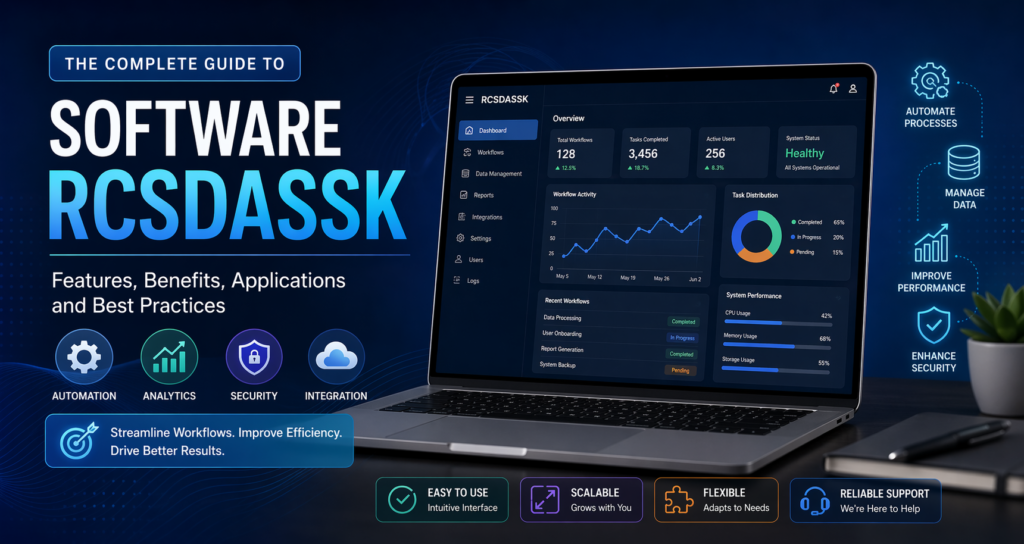
software rcsdassk
Software RCSDASSK is rapidly gaining attention as a modern solution designed to streamline digital operations, enhance automation, and improve system-level efficiency across industries. Whether you’re managing data, automating workflows, or optimizing business processes, this software introduces a structured approach that combines flexibility with performance. In today’s evolving digital ecosystem, tools like RCSDASSK are not just optional—they are becoming essential for organizations aiming to stay competitive.
This guide explores everything you need to know about software RCSDASSK, from its core functionality to advanced features, implementation strategies, and real-world applications. By the end, you’ll have a clear understanding of how it works and whether it’s the right fit for your needs.
Understanding Software RCSDASSK
Software RCSDASSK is a versatile platform designed to handle complex system operations while maintaining simplicity for end users. It integrates multiple functionalities such as data processing, workflow automation, and system monitoring into a single unified environment. This makes it highly valuable for businesses that rely on digital infrastructure to operate efficiently.
At its core, RCSDASSK is built to reduce manual effort and increase accuracy. It achieves this through automation tools that allow users to define rules and workflows. Once configured, the system can execute repetitive tasks without human intervention, saving both time and resources.
Another key aspect of RCSDASSK is its adaptability. It can be customized according to specific business requirements, whether for small teams or large enterprises. This flexibility ensures that organizations can tailor the software to match their operational goals without compromising performance.
Key Features of Software RCSDASSK
One of the strongest aspects of software RCSDASSK is its feature-rich design. It includes tools for automation, data management, reporting, and integration. These features work together to create a seamless user experience while improving productivity.
Automation is a standout feature, allowing users to create workflows that trigger actions based on predefined conditions. This eliminates the need for repetitive manual tasks and ensures consistency across operations. Additionally, the software offers advanced analytics tools that provide insights into performance metrics.
Integration capabilities are equally important. RCSDASSK can connect with existing systems, enabling data synchronization and unified operations. This ensures that businesses do not have to overhaul their entire infrastructure to adopt the software.
How Software RCSDASSK Works
Software RCSDASSK operates through a modular architecture, which means different components work independently but communicate seamlessly. This structure allows for scalability and easy updates without disrupting the entire system.
Users begin by setting up workflows and defining rules. These rules dictate how the software responds to specific inputs or events. Once configured, the system continuously monitors for triggers and executes the corresponding actions automatically.
The backend processes are designed for efficiency and speed. Data is processed in real time, ensuring that decisions can be made quickly based on accurate information. This makes RCSDASSK particularly useful in environments where timely responses are critical.
Benefits of Using Software RCSDASSK
Adopting software RCSDASSK offers numerous advantages. One of the primary benefits is increased efficiency. By automating repetitive tasks, organizations can focus on more strategic activities that require human input.
Another major benefit is improved accuracy. Automation reduces the risk of human error, ensuring consistent results across operations. This is especially important in industries where precision is crucial.
Cost savings are also significant. By streamlining processes and reducing manual labor, businesses can lower operational expenses. Over time, this leads to a higher return on investment and better resource allocation.
Core Components of RCSDASSK
Software RCSDASSK is composed of several core components that work together to deliver its functionality. These include the automation engine, data processing module, and user interface.
The automation engine is responsible for executing workflows. It processes rules and triggers actions accordingly. The data processing module handles the storage and analysis of information, ensuring that insights are readily available.
The user interface is designed for ease of use. It allows users to configure workflows, monitor performance, and access reports without requiring technical expertise. This combination of components makes RCSDASSK both powerful and user-friendly.
Table: Key Components and Their Functions
| Component | Function Description |
|---|---|
| Automation Engine | Executes workflows and automated tasks |
| Data Processing | Manages and analyzes system data |
| User Interface | Provides access and control for users |
| Integration Layer | Connects with external systems |
Applications of Software RCSDASSK
Software RCSDASSK can be applied across various industries, including finance, healthcare, education, and e-commerce. Its flexibility allows it to adapt to different operational needs.
In finance, it can automate transaction processing and reporting. In healthcare, it helps manage patient data and streamline administrative tasks. Educational institutions can use it to manage student records and automate communication.
E-commerce businesses benefit from RCSDASSK by automating order processing, inventory management, and customer support workflows. This versatility makes it a valuable tool for diverse sectors.
Implementation Process of RCSDASSK
Implementing software RCSDASSK involves several steps, starting with planning and requirement analysis. Organizations must identify their needs and define the objectives they want to achieve with the software.
The next step is configuration, where workflows and rules are set up. This phase requires careful planning to ensure that all processes are accurately represented. Testing follows, ensuring that the system works as expected.
Finally, the software is deployed, and users are trained to use it effectively. Ongoing support and updates ensure that the system continues to perform optimally.
Challenges and Limitations
While software RCSDASSK offers many benefits, it also comes with challenges. One common issue is the initial setup complexity, especially for organizations with intricate workflows.
Another limitation is the learning curve. Although the interface is user-friendly, understanding advanced features may require training. Additionally, integration with legacy systems can sometimes be challenging.
Despite these limitations, most issues can be resolved with proper planning and support. The long-term benefits often outweigh the initial challenges.
Security Features of RCSDASSK
Security is a critical aspect of any software, and RCSDASSK is no exception. It includes robust security measures to protect data and ensure system integrity.
Features such as encryption, access control, and monitoring help safeguard sensitive information. Users can define permissions to restrict access to specific data and functionalities.
Regular updates and patches further enhance security, ensuring that the software remains protected against emerging threats.
Performance and Scalability
Software RCSDASSK is designed to handle large volumes of data and high levels of activity. Its scalable architecture allows it to grow with the organization.
Performance optimization ensures that tasks are executed بسرعة and efficiently. Even as workloads increase, the system maintains stability and responsiveness.
This scalability makes RCSDASSK suitable for both small businesses and large enterprises.
Table: Performance Metrics Overview
| Metric | Description |
|---|---|
| Speed | Fast execution of automated tasks |
| Scalability | Supports growth and increased load |
| Reliability | Consistent system performance |
| Efficiency | Optimized resource utilization |
Integration Capabilities
One of the standout features of software RCSDASSK is its ability to integrate with other systems. This allows businesses to maintain a unified workflow without disrupting existing operations.
Integration options include APIs, third-party tools, and cloud platforms. This flexibility ensures that RCSDASSK can fit into various technological ecosystems.
Seamless integration enhances productivity by enabling data sharing and coordination across different systems.
User Experience and Interface
The user experience of software RCSDASSK is designed to be intuitive and efficient. The interface provides easy access to tools and features, making it accessible even for non-technical users.
Customization options allow users to tailor the interface according to their preferences. This improves usability and ensures that users can work comfortably within the system.
Clear navigation and responsive design further enhance the overall experience, making RCSDASSK a user-friendly solution.
Best Practices for Using RCSDASSK
To maximize the benefits of software RCSDASSK, organizations should follow best practices. These include proper planning, regular updates, and continuous monitoring.
Training users is also essential. A well-trained team can utilize the software more effectively, leading to better results. Regular reviews of workflows ensure that the system remains aligned with business goals.
Here are some key best practices:
- Define clear objectives before implementation
- Regularly update workflows and rules
- Monitor system performance continuously
- Provide ongoing user training
Future Trends and Developments
The future of software RCSDASSK looks promising, with ongoing advancements in technology. Features such as artificial intelligence and machine learning are expected to enhance its capabilities further.
These developments will enable smarter automation and more accurate predictions. As technology evolves, RCSDASSK is likely to become even more powerful and versatile.
Organizations that adopt such tools early will have a competitive advantage in the digital landscape.
Table: Future Enhancements Overview
| Feature | Expected Benefit |
|---|---|
| AI Integration | Smarter automation and insights |
| Machine Learning | Improved decision-making |
| Cloud Expansion | Greater accessibility and scalability |
| Advanced Analytics | Deeper performance insights |
Conclusion
Software RCSDASSK is a comprehensive solution designed to improve efficiency, accuracy, and scalability in modern digital operations. Its powerful features, combined with flexibility and ease of use, make it a valuable tool for businesses across various industries. While there may be challenges during implementation, the long-term benefits far outweigh the initial effort. By adopting best practices and leveraging its full potential, organizations can achieve significant improvements in productivity and performance.
FAQs
What is software RCSDASSK used for?
Software RCSDASSK is used for automating workflows, managing data, and improving operational efficiency across various industries.
Is RCSDASSK suitable for small businesses?
Yes, its scalable design makes it suitable for both small businesses and large enterprises.
Does RCSDASSK require technical expertise?
Basic features are user-friendly, but advanced configurations may require some technical knowledge or training.
Can RCSDASSK integrate with other systems?
Yes, it offers strong integration capabilities through APIs and third-party tools.
Is software RCSDASSK secure?
It includes robust security features such as encryption, access control, and monitoring to protect data.
How long does implementation take?
The implementation time depends on the complexity of the workflows and system requirements.
What industries can benefit from RCSDASSK?
Industries like finance, healthcare, education, and e-commerce can benefit significantly from its features.